Sasan Gir

About Gir National Park

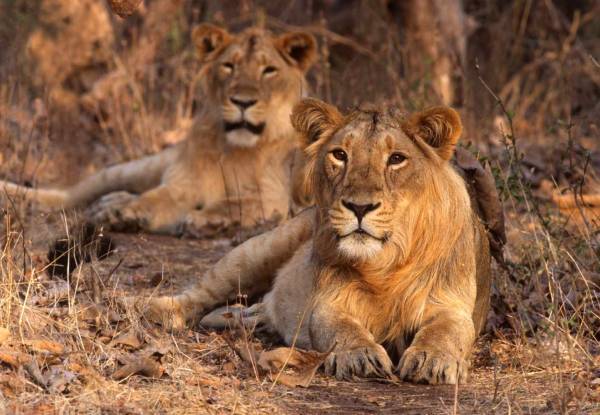
The last natural habitat of the Asiatic lion is the famous Gir National Park and Wildlife Sanctuary, Gujarat. It is a dry deciduous forest park with grasslands, rocky hills, seasonal rivers and a variety of wildlife, located in the Saurashtra region. It offers a special chance to see India's wildlife in an environment very unlike the northern and central forests of the country. The sanctuary is especially renowned for the Asiatic lion, which is now the symbol of the Gir landscape. In addition to Lions, the area is also home to leopards, striped hyenas, sloth bears, marsh crocodiles, sambar, chital, nilgai, four-horned antelope and many bird species. The forests and adjoining grasslands provide a diverse ecosystem for a wide range of flora and fauna.
Today, Gir is renowned for its wildlife, for photographers and nature lovers. Guests can go on safaris in the forest, see the animals in their natural habitat, and learn about the local wildlife and its habitat. The nearby attractions like Devalia Safari Park, Kamleshwar Dam and Somnath make it possible to combine a wildlife experience with sightseeing and exploring the culture.


Best Time to Visit Gir National Park

The period from December to March is ideal for visiting Gir National Park as the climate is favorable for safaris and outdoor activities. Sightings of wildlife can also be good during the warmer months of April and May when animals may congregate around water sources—although temperatures can be quite high. Gir National Park is usually closed for the entire monsoon season and will reopen at a different time depending on the weather in the area and regulations from the forest department. Because of the changing nature of safaris and park entry regulations, visitors should consult the current safari schedule and park-entry rules prior to planning their visit.


Gir National Park: Places, Experiences & Food

Places to Visit in Gir National Park

  • Gir National Park
  • Gir Wildlife Sanctuary
  • Devalia Safari Park
  • Sasan Gir
  • Kamleshwar Dam
  • Crocodile Breeding Centre
  • Gir Interpretation Zone
  • Kankai Mata Temple
  • Banej Temple
  • Hiran River
  • Sinh Sadan
  • Sasan Gir Forest Area
  • Somnath
  • Junagadh
  • Girnar
  • Diu


Things to Do in Gir National Park

  • Guided jeep safari
  • Asiatic lions in their natural habitat
  • Explore Gir's dry deciduous forests
  • Visit Devalia Safari Park
  • Leopards and other wildlife
  • Spot chital, sambar and nilgai
  • Look for crocodiles near water bodies
  • Explore Gir's diverse birdlife
  • Wildlife and forest landscapes
  • Visit Kamleshwar Dam
  • Hiran River and surrounding forests
  • Learn about Asiatic lion conservation
  • Visit the Gir Interpretation Zone
  • Villages and landscapes around Sasan Gir
  • Visit Kankai Mata Temple
  • Banej and its forest surroundings
  • Enjoy an early-morning safari
  • Changing colours of the forest at sunset
  • Combine a Gir safari with a visit to Somnath
  • Explore Junagadh and nearby Girnar
  • Discover local Gujarati culture and cuisine
  • Enjoy a peaceful stay close to the forest


What to Eat in Gir National Park

  • Gujarati Thali
  • Kathiyawadi Thali
  • Bajra Rotla
  • Sev Tameta
  • Lasaniya Bateta
  • Ringna Bateta
  • Gujarati Kadhi
  • Dal Dhokli
  • Khichdi
  • Undhiyu
  • Thepla
  • Khakhra
  • Khaman
  • Dhokla
  • Khandvi
  • Patra
  • Fafda
  • Jalebi
  • Bhajiya
  • Gota
  • Dabeli
  • Sev Usal
  • Lilva Kachori
  • Pyaaz Kachori
  • Samosa
  • Farsan
  • Shrikhand
  • Basundi
  • Mohanthal
  • Chaas
  • Lassi
  • Masala Chai


How To Get There

By Air

The closest airport is at Keshod, 70 km away or visitors can opt for the one at Rajkot, 160 km away.

By Road

Sasan Gir is well-connected by road to all major cities in the state through good motorable roads.

By Rail

Sasan Gir has a small railway station so visitors can reach the national park through Jungadh or Veraval railway stations which are both at the same distance from here.

Gir park 01

Gir park

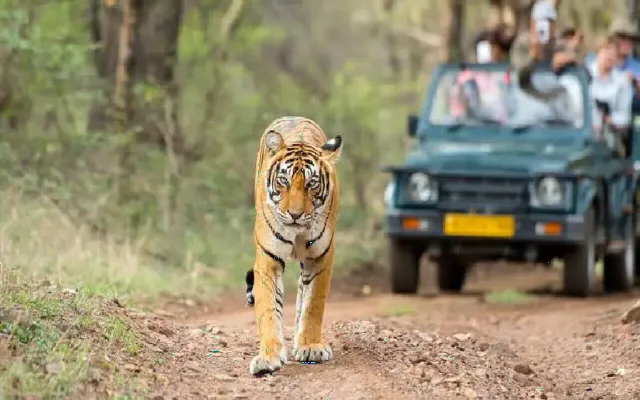
To find majestic lions prowling around freely, Gir park is that the only place within the world besides the jungles of Africa. the whole forest of the park is dry and deciduous and is thus the perfect habitat for the Asiatic lion. Besides lions, leopards are the most attraction of the park. Other wildlife one can spot are sambar deer, chowsingha (the world’s only four-horned antelope), jackal, India fox, hyena etc. Moreover, the park invites birdwatchers for its quite 200 species of avifauna. a number of the prominent are the endangered white-backed and long-billed vultures. The forest is additionally home to quite 40 species of reptiles and amphibians. to identify Marsh crocodiles in large numbers, one can visit the Kamleshwar reservoir within the sanctuary. a number of the snakes that reside here are the hamadryad , the saw-scaled viper, the krait and Russell’s viper.   Spread over a neighborhood of 1,412 sq km, the park features a core area of about 258 sq km. it's located about 65 km south-east of Junagadh and was notified as a wildlife sanctuary on September 18, 1965, to conserve the Asiatic lion. While the lions were completely exhausted from other parts of Asia, the indiscriminate hunting by the people of Junagadh led to a fall in their numbers in Gir. The Nawabs of Junagadh protected the lions in their hunting grounds, then the Forest Department took over. From a population of about 20 lions in 1913, the numbers rose to about 523 in 2015.

Jungle Safari 02

Jungle Safari

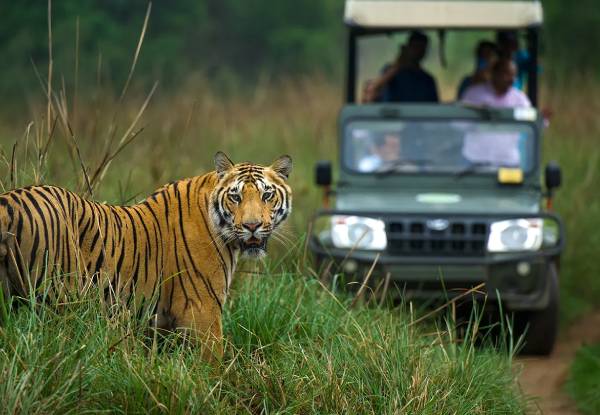
To find majestic lions prowling around freely, Gir park is that the only place within the world besides the jungles of Africa. the whole forest of the park is dry and deciduous and is thus the perfect habitat for the Asiatic lion. Besides lions, leopards are the most attraction of the park. Other wildlife one can spot are sambar deer, chowsingha (the world’s only four-horned antelope), jackal, India fox, hyena etc. Moreover, the park invites birdwatchers for its quite 200 species of avifauna. a number of the prominent are the endangered white-backed and long-billed vultures. The forest is additionally home to quite 40 species of reptiles and amphibians. to identify Marsh crocodiles in large numbers, one can visit the Kamleshwar reservoir within the sanctuary. a number of the snakes that reside here are the hamadryad , the saw-scaled viper, the krait and Russell’s viper.   Spread over a neighborhood of 1,412 sq km, the park features a core area of about 258 sq km. it's located about 65 km south-east of Junagadh and was notified as a wildlife sanctuary on September 18, 1965, to conserve the Asiatic lion. While the lions were completely exhausted from other parts of Asia, the indiscriminate hunting by the people of Junagadh led to a fall in their numbers in Gir. The Nawabs of Junagadh protected the lions in their hunting grounds, then the Forest Department took over. From a population of about 20 lions in 1913, the numbers rose to about 523 in 2015. Visitors to the park can book vehicles and guide services for a jungle safari at Sasan Gir’s reception centre. One can obtain permits to go to the park at Sinh Sadan Orientation Centre at Sasan Gir or catch on online through the Gir Online Permit Booking System. Between mid-June and mid-October, the Gir Jungle Trail Safari remains closed for public.

Kankai Mata Temple 03

Kankai Mata Temple

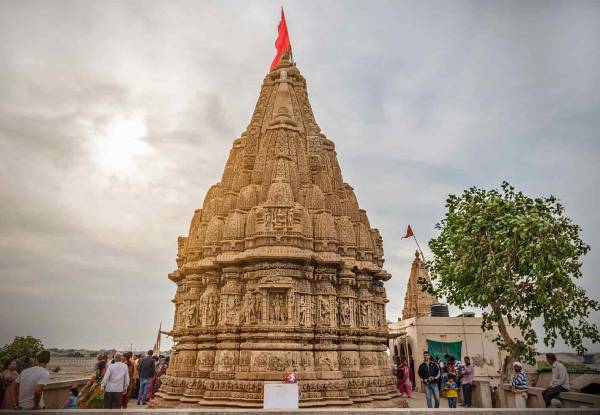
Dedicated to Kankai Mata, who is believed to be the protector of the shepherds of Gir forest, this temple lies at the guts of the jungle. it’s located amidst wild surroundings and visiting it are often an exciting experience. such a lot in order that one can even hear lions roar at night! From the premises, you’ll see animals gathering at the lake nearby to drink from its depths. Though devotees are allowed to remain at the temple in the dark , the Forest Department prohibits the stay of quite 50 people at a time. The premises of the temple have high walls and are relatively safe. At night, you’ll looked at the star-lit inky black sky through the treetops of the jungle. If you’re both spiritually and naturally inclined, it’s an experience truly worth having.

Tulsishyam Hot Springs 04

Tulsishyam Hot Springs

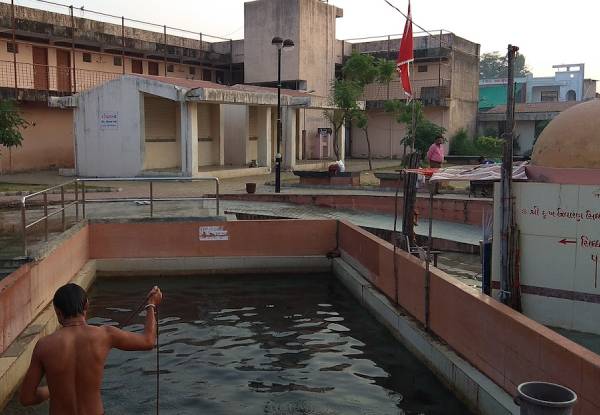
Situated on the Dhari-Una road amid scenic setting, Tulsishyam Hot Springs are believed to possess curative powers. Pilgrims can often be seen bathing within the waters. The springs also find mention within the Puranas and are mentioned as ‘Taptodak’. Legend has it that Lord Krishna killed a demon, Tul, and thus the place has been named Tuslishyam: Tulsi for tul and shyam for Lord Krishna. there’s a temple by an equivalent name located within the vicinity that’s dedicated to Lord Krishna. it’s said to be 100 years old and may be a major pilgrim centre. It houses about 200 cows in its gaushala (cow shed). While visiting the springs, rope during a visit to the evening arti (a fire ritual) that’s quite sight. Lunch and dinner are provided liberal to visitors here.

Travel Journal

Stories, Secrets, And Insights To Inspire Your Next Adventure

Travel tips, detailed itineraries and cultural insights from our team in Jaipur — everything you need to plan your perfect India journey.

01/ 10 All stories
Travel by Interest

From Culture To Adventure — Find The Journey That Matches Your Soul