
 01
Adalaj Stepwell
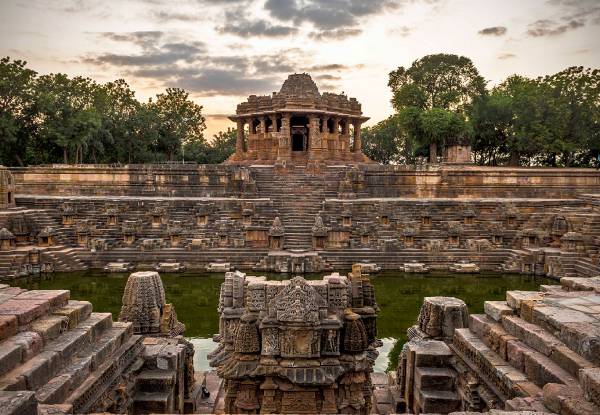
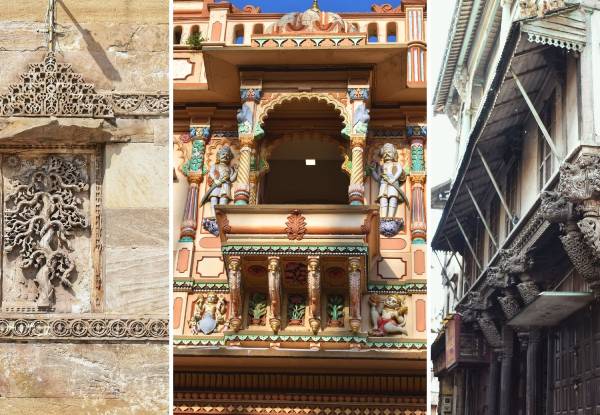
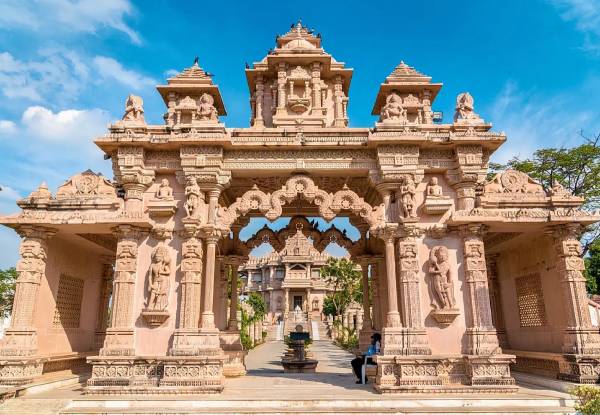
Among the best samples of stepwells in Gujarat, about 19 km north of Ahmedabad, lies Adalaj Vav or Adalaj Stepwell. it had been built by queen Rudadevi, wife of Veer Singh, the chief of Vaghela dynasty, in 1499, in her husband’s memory. Legend has it that within the 15th century, Rana Veer Singh ruled over the region that was referred to as Dandai Desh some time past . because the kingdom always faced water shortage and was hooked in to rains, the ruler ordered the development of an outsized and deep well. But before it might be completed, neighbouring Muslim ruler, Mohammed Begda, attacked Dandai Desh and Veer Singh was killed. Though his widow wanted to perform sati (a ritual of widows immolating themselves when their husband dies) , Begda stopped her and told her that he wanted to marry her. She agreed on the condition that he complete the development of the stepwell first. Begda agreed and therefore the stepwell was made in record time. But the queen had other plans. She first circumambulated the stepwell with prayers and thereafter jumped into it to be one together with her husband. what's unique about this stepwell is that it's three entrances, giving thanks to a platform resting on 16 pillars. All three of the stairway entrances meet underground where the platform has an octagonal top. The corners of all 16 platforms have shrines carved into them. The well is five floors deep and aside from deities, the carvings portray a good range of subjects, from women churning butter to them adorning themselves ahead of a mirror. The stepwell, in its time, gave shelter to pilgrims and traders. it's believed that the villagers wont to come here to fill water and offer prayers to the deities. Experts within the field of architecture and archaeology believe that thanks to its octagonal ceiling, little air or sunlight entered the landing, the rationale why the temperature inside is usually cooler than outside. The vav may be a spectacular specimen of Indo-Islamic architecture with fine Jain symbols as a mirrored image of the amount it had been inbuilt . Worth a visit are kalpvriksha (tree of life) and ami khumbor (pot containing water of life) that are carved out of single slab of stone. Locals believe that the tiny frieze of navgrahas or nine planets near the well’s edge protects the monument from evil spirits.